
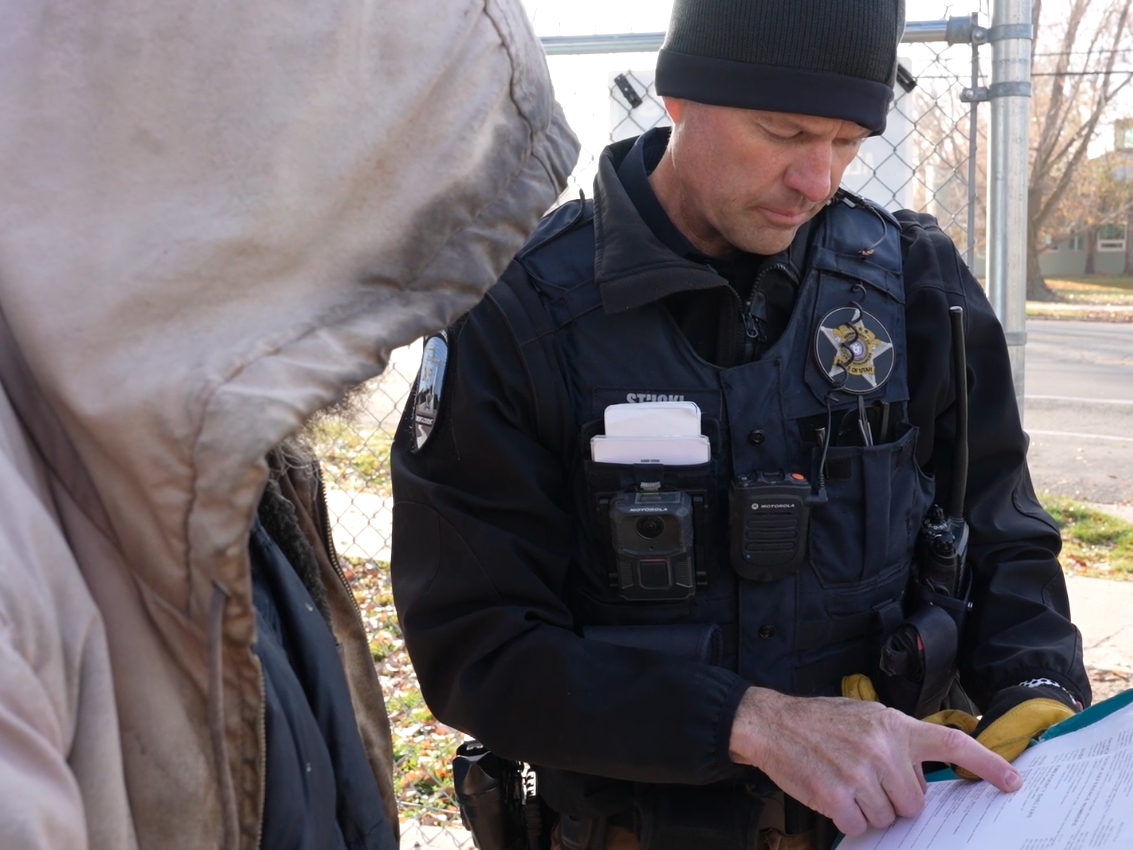
SALT LAKE CITY – The Utah Division of Forestry, Fire and State Lands, the Utah Department of Natural Resources Division of Law Enforcement and other local law enforcement agencies have been conducting a public safety initiative along the Jordan River called “Operation Safe Streets.” This initiative has successfully reduced criminal activity and restored public access to one of the primary recreational corridors in Salt Lake County.
“Operation Safe Streets” started in August and continues to bring together state and local agencies to address safety concerns along the Jordan River Trail.
The operation involved a coordinated effort among FFSL, DNRLE, the Salt Lake City Police Department, the Utah Highway Patrol, and several other local law enforcement agencies. The primary objective was to reclaim the trail from 1000 North to North Temple. This stretch of state sovereign land had become a hotspot for illegal camping and criminal activity.
DNR dedicated 34 natural resource officers to assist partner agencies during the month-long push. These officers increased weekend patrols and added, on average, four additional officers on the trail at any given time.
“The overall goal was to help residents, workers and recreational users visit this part of the Jordan River without fear of harm or exposure to criminal activity,” said Ben Stireman, Deputy Director for the Division of Forestry, Fire and State Lands.
Patrols used a mix of foot, bicycle and UTV units to navigate the Jordan River Trail. Officers focused on enforcement and outreach while engaging the public, and strict protocols were followed for warrant arrests and felonies. Officers also engaged with the homeless population along the river trail, offering connections to medical care, shelter, and resources for victims of abuse.
Thick vegetation had previously made this area of the Jordan River difficult to patrol and easy for offenders to evade law enforcement. As a part of the operation, state partners worked with the city to cut back the overgrowth, which had facilitated illegal encampments and drug activity.
“Area homeowners were having their homes broken into, and folks couldn’t safely use the trail,” said Lt. Eric Stucki with the DNR Division of Law Enforcement. “The area was overgrown with weeds, trees and bushes that provided easy cover for people to hide and sleep.”
During patrols from August to Nov. 24, officers made 92 arrests, 14 of which were for felonies, and issued 122 citations for drug-related activity.
The increased police presence and environmental cleanup have yielded immediate results. Authorities report that vegetation clearing and consistent enforcement have pushed criminal elements out of the area.
“People have moved on to other areas, and the recreational activities have returned,” Stucki said. “We have people back out on the trail walking dogs, running and hiking. It’s now a safer area for the community.”
Individuals whom officers encountered along the trail were also educated about the environmental impact of littering and local crime issues, fostering a better understanding of how these violations affect the quality of life of nearby residents.
While the intensive phase of the operation has concluded, officials emphasize that the work is not done. Law enforcement agencies will continue to coordinate patrols to maintain progress.
###