Wildfire Risk
Utah Wildfire Risk Assesment Portal
The Utah Wildfire Risk Assessment Portal (UWRAP) is the primary mechanism for the Division of Forestry, Fire and State Lands to deploy wildfire risk information and create awareness about wildfire issues across the state. It consists of a suite of applications tailored to support specific workflow and information requirements for the public, local community groups, private landowners, government officials, hazard-mitigation planners, and wildland fire managers. Collectively these applications provide the baseline information needed to support mitigation and prevention efforts across the state.
The portal provides access to wildland fire risk assessment data finalized in 2023 in collaboration with local, state, and federal governments as well as the private sector.
Visit the UWRAP
Utah Wildfire Risk Assesment
The purpose of the Utah Wildfire Hazard Assessment is to provide foundational information about wildfire hazard across all land ownerships within the state of Utah. The foundation of any wildfire assessment is the wildfire hazard data used to characterize fire behavior on the landscape. To manage wildfire in Utah, it is essential that accurate and high-resolution wildfire hazard data, to the greatest degree possible, is available to drive fire management strategies. These hazard outputs can be used to inform the planning, prioritization, and implementation of prevention and mitigation activities such as prescribed fire and mechanical fuel treatments. In addition, the hazard data can be used to support fire operations and aid in decision-making for the allocation and positioning of firefighting resources.
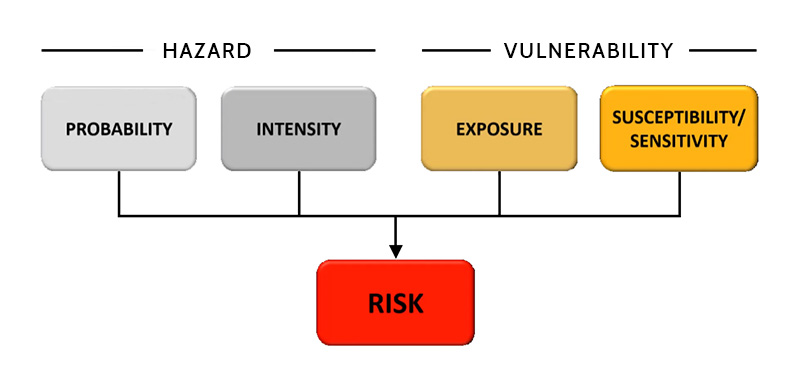
In the quantitative framework for assessing wildfire risk to highly valued resources and assets (Scott et al. 2013), wildfire hazard is defined as a physical situation with the potential for causing damage to vulnerable resources or assets. Wildfire hazard is measured by two main factors in this risk assessment framework: 1) burn probability (or likelihood of burning), and 2) fire intensity (measured as flame length, fireline intensity, or other similar measures). “
Detailed information about the Utah wildfire risk assessment model and source data is found in the following PDF reports: Fuelscape Report and Wildfire Hazard Report.
Communities at Risk
Wildfire is a natural part of Utah’s ecosystems, but the development within and around wildlands over the last two decades has posed challenges for wildfire and safety officials. In 2001, Utah initially identified almost 600 communities and their surrounding natural resources as “at risk” from wildland fire. Our 2025 re-evaluation and update showed that the list for Utah has grown to over 700 communities at risk.
During the evaluation process, communities throughout Utah that are at risk from wildfire are determined by professional wildland fire officials using the standard methodology linked below. Multiple risk factors are analyzed for each community such as: wildfire occurrence, structure susceptibility, local vegetation conditions, infrastructure, and firefighting capabilities.
In addition to being required by federal Wildland-Urban Interface grant programs, Utah’s Communities at Risk (CARs) map serves as a tool to prioritize treatments in areas and communities at the highest risk of catastrophic wildfires. Communities considered “at risk” from wildfire can be found on the linked map below.
Please contact one of our local Forestry, Fire, and State Lands Area Offices or the State Office for more information on this or with questions regarding mitigation efforts.
Disclaimer: 1) Point placements for communities are arbitrary and do not necessarily reflect the geographic center of the community. 2) The CARs determination is a generalized, ground-truthed, community evaluation based on the established methodology provided on this site. 3) This map should not be compared to other wildfire risk layers or independently developed parcel or community-level evaluations, as the metrics for determining those risks differ from the methodologies used here.